





AI literacy is becoming an important part of education. As learners and educators encounter artificial intelligence, they need opportunities to understand how it works, question its outputs, and make thoughtful decisions about its use.
A 2024 Common Sense Media survey found that seven in ten US teenagers aged 13–18 had used generative AI. TALIS 2024 reported an OECD average of 36% of lower-secondary teachers using AI in their work. These findings describe different populations and settings, providing useful starting points for conversations about educational guidance and support.
On 18 June 2026, the European Commission and the OECD presented the AI Literacy Framework for Primary and Secondary Education. It provides a common reference for developing learners’ understanding and responsible use of AI, while supporting teachers, school leaders, and policymakers.
The framework brings together four domains: engaging with AI, creating with AI, managing AI, and shaping AI. They connect critical evaluation, creative work, decisions about task delegation, and improving AI systems in line with human values.
For vocational education and training, we see a valuable opportunity to explore these principles through practical learning. Students preparing for professional roles can discuss how AI-generated information should be checked, which tasks could benefit from AI assistance, and how to explain the decisions they make.
For example, a teacher could invite learners to review an AI-generated customer email. Does it communicate the intended message? Are its claims accurate? What changes would make it appropriate for the situation? Explaining those changes can help connect digital skills with professional communication and informed judgement.
Teachers also need time and support to develop their own approach. Practical examples, peer discussion, and opportunities to test tools can help educators connect AI literacy with their subject knowledge and teaching goals.
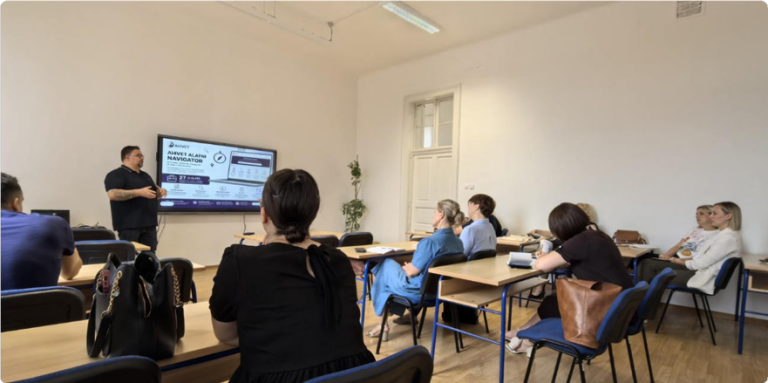
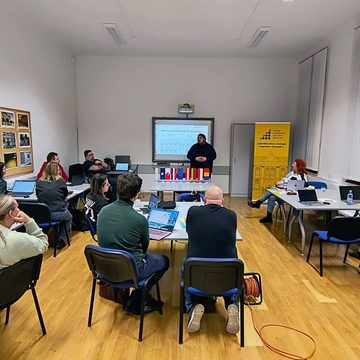
Within AI4VET, we aim to support this process through educational resources, professional development, collaborative workshops, and classroom pilots. Our focus is on helping educators make purposeful choices and create learning activities in which students actively examine, apply, and reflect on AI.
Building AI literacy is a continuing educational task. It calls for curiosity, critical thinking, and attention to the people affected by technology.
Which aspect of AI literacy would you prioritise in your classroom?
Read the framework:
OECD: AI Literacy Framework for Primary and Secondary Education
Photo source:
European Commission — Learning Corner