




Artificial intelligence is opening new possibilities for everyday teaching. For educators, the useful question is how these developments can support lesson preparation, meaningful feedback, and learning activities that respond to students’ needs.
In its June announcements for ISTE 2026, Google presented developments across Classroom, Gemini, and Chromebooks. These included a Classroom app in Gemini, expanded teacher-led AI activities in Google Classroom, Guided Learning tools on Chromebooks, and personalised study notebooks in Gemini.
The Classroom connection is designed to make teaching support more relevant to the class context. Teacher-led activities aim to connect AI with course materials and offer insights into students’ learning. Study notebooks are designed to adapt lessons and quizzes as learners progress.
Google described a phased rollout, with availability depending on the feature, account, and device.
For vocational education and training, these announcements offer ideas to explore. Learners bring different levels of knowledge, workplace experience, and confidence. Educators need ways to provide appropriate practice while maintaining clear learning goals and opportunities to demonstrate practical competence.
For example, a teacher could use AI to draft two versions of a business costing exercise: one with additional explanations and another requiring greater independence. After reviewing the content, the teacher could select the version that best supports each learner’s current needs.
In a marketing or customer service lesson, AI could help draft a workplace scenario for discussion. Learners could examine a customer request, propose a response, and explain their decisions. The teacher would guide the activity and assess how well students apply professional knowledge.
These possible uses connect preparation with coaching and practical learning. Digital feedback can help inform the next activity, while teachers combine it with observation, discussion, and learners’ explanations to understand progress.
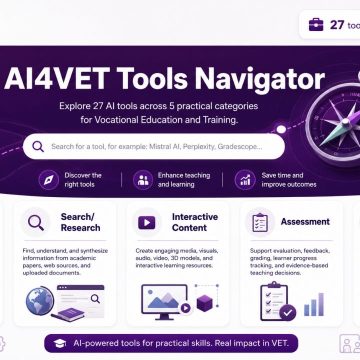
Within AI4VET, we aim to support educators in developing this approach through resources, professional development, collaborative learning, and classroom pilots. Our focus is on making informed choices about tools and connecting their use with responsible practice and concrete vocational learning goals.
A useful starting point is one lesson and one clear need. What would help your learners practise, participate, or explain their understanding more effectively?
Which area would you prioritise: lesson preparation, differentiated practice, feedback, or revision?
Material source:
Google for Education — ISTE 2026 announcements
Photo source:
Microsoft Source EMEA